How to Estimate Solar Power Size for a Container House

One way to calculate the solar system size for a container house is to begin with your daily electricity consumption in kWh and then divide it by the average peak sun hours in your area. Finally, add a 20-30% buffer for cloudy days, inverter losses, and future growth.
In simple terms:
Solar System Size (kW) ≈ Daily Energy Use (kWh) ÷ Peak Sun Hours
This rough estimate provides a good starting point for designing a solar system for a container home. However, there are many other considerations involved in real-world solar design, including appliance loads, storage requirements, and roof area constraints.
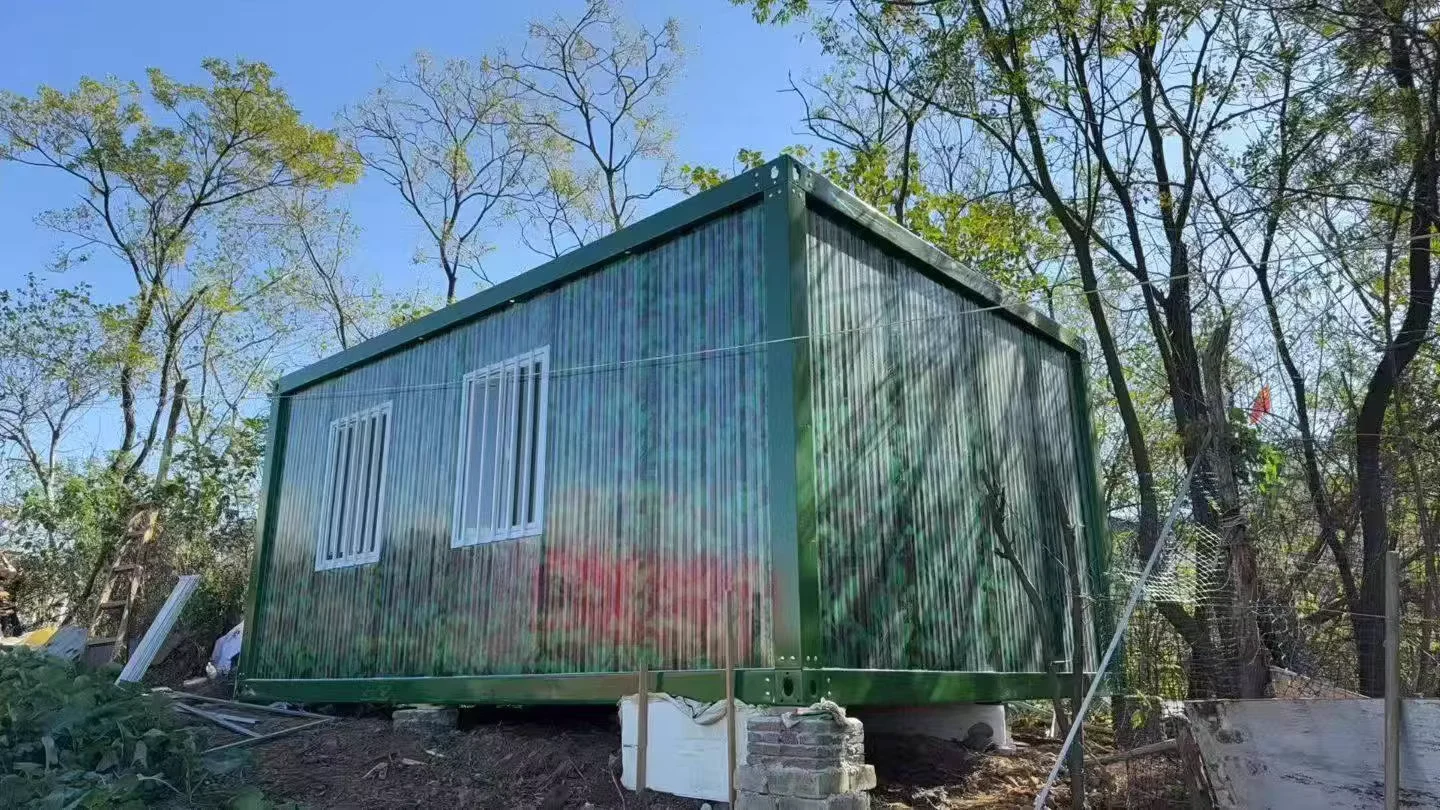
Why solar power is suited to container homes
Container homes are designed for off-grid, remote, emergency, or environmentally conscious living. Their compact, modular design makes them highly compatible with solar power.
The most important benefits of solar power installation in a standard container home are:
- Lower energy requirements due to smaller living space
- Flat or slightly pitched roofs make it easy to install solar panels
- Container homes are commonly located in off-grid areas
- Modular design enables scalable solar power systems
However, roof space is limited, and thus obtaining the correct system size is important.
Step 1: Determine Daily Electricity Consumption
Estimate the daily electricity consumption of the container house.
Make a list of all appliances and estimate their daily electricity use
Example: Power Use Snapshot
| Appliance | Power (W) | Hours/Day | Daily Use (Wh) |
|---|---|---|---|
| LED Lighting | 60 | 5 | 300 |
| Refrigerator | 150 | 8 | 1200 |
| Laptop | 60 | 6 | 360 |
| Water Pump | 200 | 1 | 200 |
| Small Air Conditioner | 900 | 4 | 3600 |
| Misc Devices | 200 | 3 | 600 |
Total Daily Consumption: 6,260 Wh (approximately 6.3 kWh)
For a small container home, the daily energy consumption is likely to be in the following ranges:
- 3-5 kWh for simple living
- 5-8 kWh for moderate use
- 8-12 kWh for homes equipped with air conditioning
Based on experience with small solar power system designs, many single-container homes can be powered satisfactorily by a system that provides 5-7 kWh of electricity per day.
Step 2: Calculate Local Peak Sun Hours
Solar panels do not work at their full capacity throughout the day. Solar panel engineers use a measure called Peak Sun Hours (PSH).
Average values are:
| Region | Peak Sun Hours |
|---|---|
| Southern USA | 5–6 hours |
| Northern USA | 3–4 hours |
| Europe | 2.5–4 hours |
| Middle East / Australia | 5–6.5 hours |
For instance, California and the Southern States get an average of 5.5 peak sun hours per day.
Step 3: Calculate the Solar Panel Capacity
Use the simple sizing formula.
Example:
Daily electricity requirement: 6.3 kWh
Peak sun hours: 5.5 hours
Calculation:
6.3 ÷ 5.5 ≈ 1.15 kW
However, solar power systems always have a buffer to provide for:
- inverter losses
- dust/shading
- light intensity variation with seasons
- battery charging losses
The general design guideline is to add 25-30% capacity.
Final calculation:
1.15 kW × 1.3 ≈ 1.5 kW solar power system
Thus, a 1.5-2 kW solar panel system would be more than sufficient for this container house.
Step 4: Calculate the Number of Solar Panels
Next, calculate the system size in terms of actual panels.
Most domestic solar panels available in the market today are between 400W and 550W.
Using 450W panels:
1.5 kW system:
1500 W ÷ 450 W ≈ 4 panels
2 kW system:
2000 W ÷ 450 W ≈ 5 panels
Typical Panel Requirement
| Solar System Size | Panels Needed (450W) |
|---|---|
| 1 kW | 3 panels |
| 2 kW | 5 panels |
| 3 kW | 7 panels |
| 5 kW | 11 panels |
A single shipping container roof can accommodate 6-10 solar panels, depending on the design.
Step 5: Think About Battery Storage
In most cases, especially in off-grid container homes, battery storage is a must.
A good guideline to follow is:
Battery Capacity = 1-2 Days of Electricity Usage
Example:
Daily usage = 6.3 kWh
Battery storage recommendation:
Minimum: 6 kWh
Ideal: 10-12 kWh
Lithium iron phosphate batteries (LiFePO4) are popular choices because of their:
- long cycle life
- high efficiency
- improved safety over other lithium-ion batteries
In most contemporary container homes, a 10 kWh battery bank and a 2 kW solar panel system provide a reliable off-grid power system.
Real Example: Solar System for a 40ft Container Home
Let’s take a look at a simple real-life problem.
Container home: 40 ft
Location: Arizona
Electricity requirement: 7 kWh
Peak sun hours: 6 hours
Calculation:
7 ÷ 6 = 1.17 kW
Adding 30% as a buffer:
1.17 * 1.3 ≈ 1.5 kW
Configuration:
| Component | Specification |
|---|---|
| Solar Panels | 5 × 450W panels |
| Inverter | 2 kW hybrid inverter |
| Battery | 10 kWh LiFePO4 battery |
| Mounting | Roof-mounted system |
This will be enough to power lights, refrigeration, appliances, and air conditioning.
Container Roof Space Available for Solar Panels
The roof space available for solar panels can be an issue.
| Container Type | Roof Area |
|---|---|
| 20 ft container | ~13.9 m² |
| 40 ft container | ~28.3 m² |
Standard solar panels require 2 m² of roof space.
Estimated Capacity:
- 20 ft | 6 pieces of 450W panels, 2.7 kW
- 40 ft | 12 pieces of 450W panels, 5.4 kW
As a result, some of these homes have additional solar panels placed on the ground.
Practical Tips When Sizing Solar Power for Container Homes
Practical experience from solar-powered container home projects has given us some simple tips that can be applied to our designs to prevent future power shortages.
- Oversize the solar array slightly
The solar array should be 20-30% larger than the calculated requirement to be more reliable. - Select high-efficiency solar panels
The roof space of the home is limited, so it’s best to select the highest wattage panels available. - Design for future appliances
Container home designs will probably require air conditioning, water heaters, or electric vehicles in the future. - Select a hybrid inverter
Hybrid inverters can connect to batteries, solar panels, and even generators. - Design for seasonal variations
Solar energy in the winter can be 30-50% lower.
Designing the solar power system for our container home is not complicated once we have understood the basic calculations.


