How Solar Panels Work on Shipping Containers for Off-Grid Living

The operation of solar panels attached to shipping containers works through conversion of sunlight into electric power using photovoltaic (PV) cells, with the excess stored in batteries, which distribute power via the system. The combination is compact, highly-efficient and independent since it works off the grid when used with shipping containers.
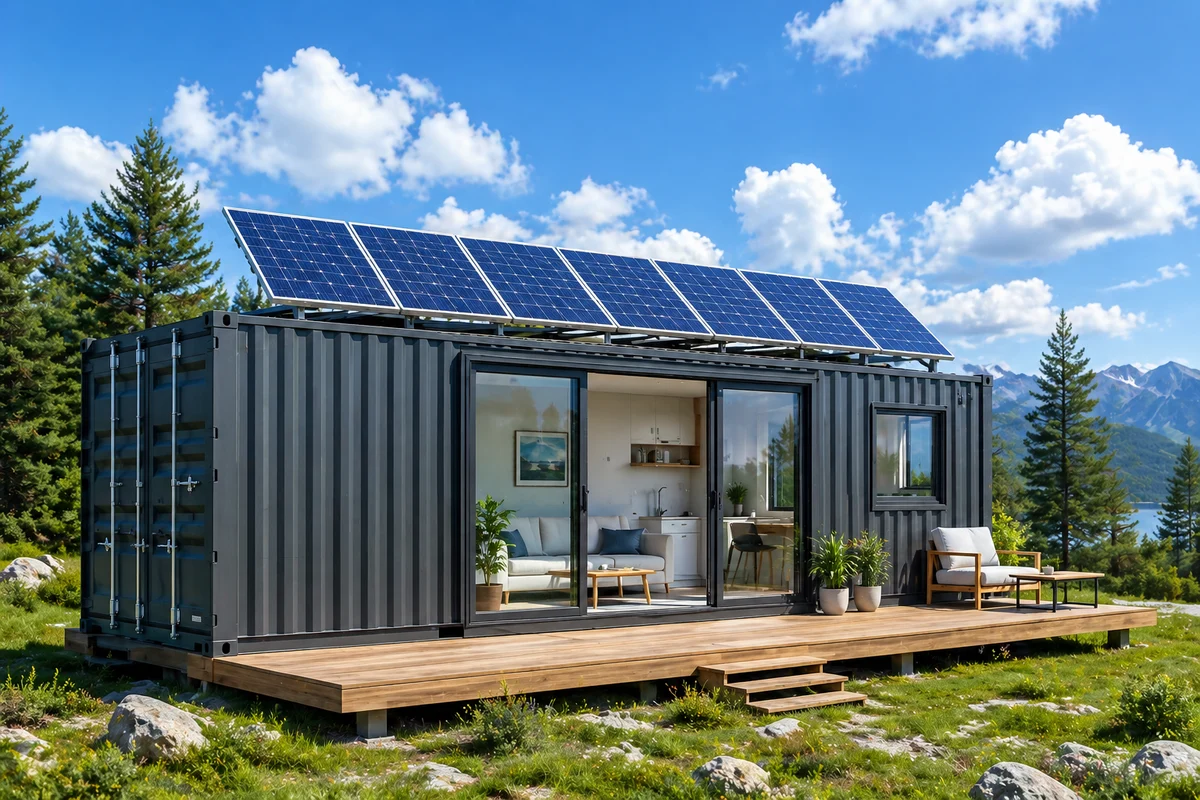
Why Are Shipping Containers and Solar Power So Good Together?
Shipping containers have evolved into great platforms for setting up off-the-grid dwellings. They provide the necessary infrastructure for incorporating solar power systems easily. Once you attach them to shipping containers, they provide enough energy for your needs without connecting to any grid.
From my experience installing energy systems based on shipping containers, the greatest benefit I can see is convenience. Everything is pre-prepared and pre-installed in shipping containers.
How the System Works (Step-by-Step Process)
Solar-powered shipping container systems usually contain the following equipment:
1. Solar Panels Absorb Sunlight
Fixed onto the roof or foldable supports of the container, solar panels absorb sunlight and generate DC electricity.
2. Inverter Provides Conversion
Because most electrical devices require AC currents, a special converter transforms the electricity into AC.
3. Battery Pack Stores Electricity
In order to provide electricity at any time of the day, extra electricity is stored in battery packs (often lithium or LiFePO4).
4. Energy Management System
The management system ensures that electricity is used and distributed efficiently.
5. Electric Consumption
Power can be distributed between various sources of consumption, including lights, devices, HVAC systems, and EV chargers.
Features of HighJoule Solar Container Home
The solar container homes from HighJoule are made specially for people living without electrical grids. They provide an integrated system of energy production, storage, and intelligent management.
Main Features:
- Built-in solar panels and wiring
- Energy-efficient LiFePO4 batteries
- Plug-and-play installation
- Sturdy and weather-resistant housing
- Modular design that is easy to expand
These systems do not require additional installation; they are ready-made for use. It eliminates the necessity for several specialists to install different devices.
Performance Characteristics of Solar Container System
Here are some specifications for the medium-sized solar container system:
| Component | Specification |
|---|---|
| Solar Panel Capacity | 5 kW |
| Battery Storage | 10–15 kWh (LiFePO4) |
| Daily Energy Output | 20–25 kWh (sunny conditions) |
| Inverter Efficiency | 95%+ |
| Backup Duration | 1–2 days (no sunlight) |
It can provide enough electricity for the following appliances:
- Lamp and other electronics
- Refrigerators and other household items
- Water pumps
- Air conditioners
Off-Grid Shipping Container Solutions Using Solar Energy
There are numerous applications for which shipping containers are used nowadays, but at least include:
- Building in remote locations
- Refuges in disaster relief operations
- Eco-friendly vacation homes
- Rural home in areas where there are no electric grids
- Military and research stations in remote locations
In one particular example, I had an opportunity to participate in, homes built with the help of shipping containers, equipped with solar panels, became operational within only two days after their installation in an area with no infrastructure. Such rapidity and independence could hardly be achieved with other means.
Technical Considerations
If solar panels must be used in conjunction with shipping containers, the following considerations may be taken into account:
Direction and Angle
The panels are supposed to be oriented southward, with appropriate angles.
Roof Limitation
Due to the limitation of roof size, it will be reasonable to use highly efficient panels.
Expandability
There are several options that offer expandable panels.
Cooling System
Ventilation will be required due to batteries and other electronic devices.
Challenges That Must be Addressed
Of course, this method does have some drawbacks worth mentioning:
- Dependency on Weather – Less energy from sun is generated on cloudy days.
- Initial Cost – Better quality solar containers are somewhat expensive.
- Energy Efficiency – Off-grid power requires careful use of energy resources.
However, all these can be compensated by adequate planning and battery energy storage capabilities.
Industry Trends and Developments
Currently, the solar container market experiences rapid changes. Here are some trends that can be observed:
- Usage of AI-powered systems for managing electricity generation
- Development of high-density energy batteries (LiFePO4 becomes standard)
- Design of foldable solar panels that are easier to transport
- Systems capable of using wind energy alongside solar and diesel generators
HighJoule is actively integrating such advances in their solutions.
Closing Words
Solar panels mounted on containers may seem to be only an invention, but this technology brings many benefits to off-grid life. Not only does it ensure renewable energy sources, but it also allows mobility and self-sufficiency at the same time.
It is easy to see that this technology removes many limitations related to off-grid life that many potential customers face.


