How Many Solar Panels for a 3000 sq ft Home

For a 3000 square-foot home in the US, you can expect to need about 20–30 solar panels, if you aim to generate enough electricity to cover most or all of your annual usage. This incorporates typical residential panel dimensions (300–400 watts a panel) and the average energy usage for a home that size.
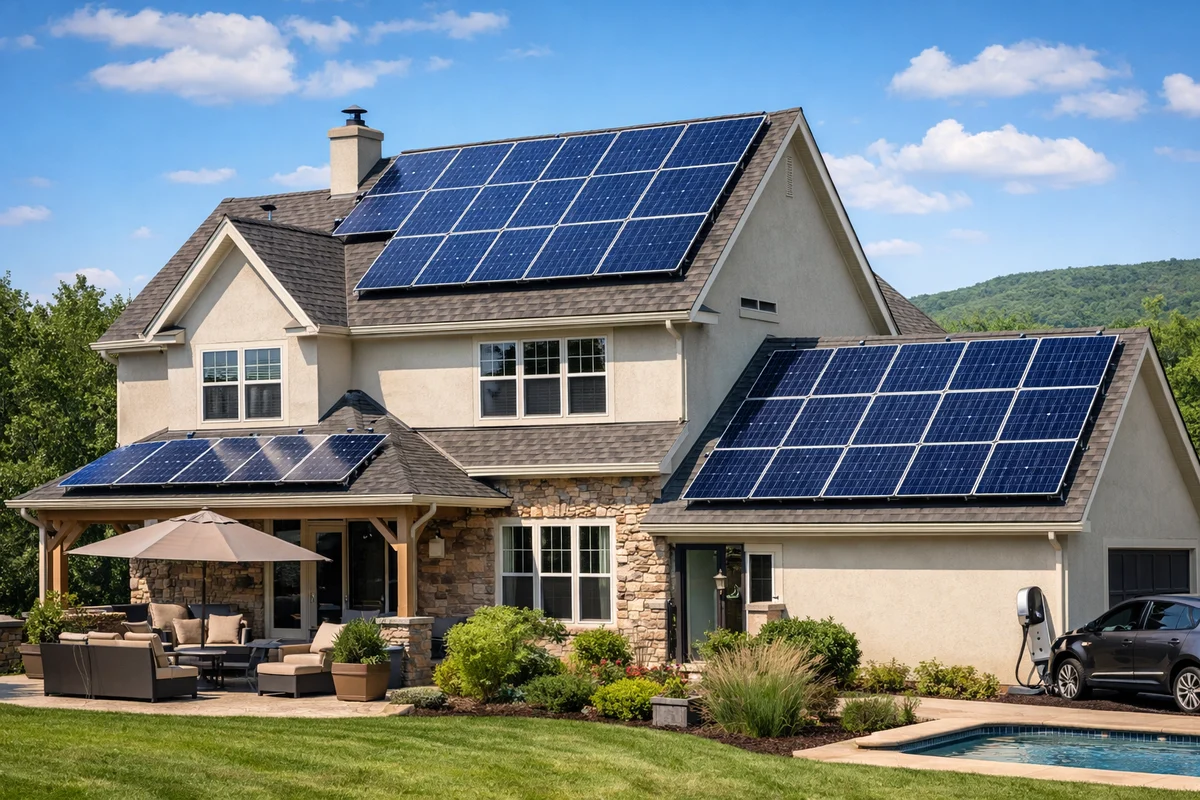
Why Is the Number of Panels a Range
Square feet is, of course, a starting point, but it’s not the only factor when determining the size of a solar system. Here are the two main factors that determine the total number of solar panels you will need:
- Annual Energy Requirement (kWh): Large energy consumers will require more solar output.
- Panel wattage: Higher wattage panels (e.g., 400W panels) have more power potential than lower wattage (e.g., 300W panels).
- Sunlight exposure: Panels in homes in sunny climates produce more electricity.
- Roof angle and shading — In order to maximize energy production, it’s best if the roof is pointing south and the roof is not shaded.
Typical Panel Estimates by Wattage
Here’s a simple chart to reference to determine how many panels you can install based on the wattage of the panels you choose:
| Panel Wattage | Approx. Panels Needed for 3000 sq ft |
|---|---|
| 300W | 25–30 |
| 350W | 22–27 |
| 400W | 20–25 |
These are high-level approximates rooted in the typical American usage for a large house (usually around 13,000–15,000 kWh/year) and solutioning ratios from solar vendors.
Step-by-Step Look at the Math
If you require a more tangible understanding of how this works, here’s a simplified calculation method:
- Locate your yearly electricity consumption (kWh): Look at your utility bills over the last 12 months.
- Select panel wattage: Typical residential solar panels are about 300W to 400W.
- Production estimate per panel: Take your panel wattage and multiply it by the average sun hours per day where you live (i.e., 4.5 to 5 hours/day).
- Number of panels to buy: Divide your yearly kWh requirement by your expected kWh production per panel per year.
For example, your 3000 sq ft house consumes 14,000 kWh per year, you are using 350W panels and living in a place that has 4.5 peak sun hours per day:
Annual energy production per panel ≈ 350W × 4.5 h × 365 ≈ 577 kWh
Panels needed ≈ 14,000 / 577 ≈ 24 panels
That fits with the typical range mentioned above.
Other Factors That Affect the Count
Certain aspects of your home can greatly affect the number of panels you’ll need, so keep these in mind:
- Electric heating or cooling: Air conditioning, heat pumps, or electric heating may contribute thousands of kWh per year.
- EV charging: At home, electric vehicles can add 3,000 to 5,000 kWh to the annual total.
- Pool pumps and appliances: Pool pumps, hot tubs and other high-energy appliances will increase use.
If you’re powering more than the typical home load (say, an electric vehicle and heat pump), you might want to aim for the high end of the range (30+ panels).
Real-World Scenario
Having worked with homeowners all across the country, I have seen how two homes of the same size can have largely different solar array requirements. For example:
- A 3000 sq ft house in Arizona with large summer cooling demands may consume 18,000+ kWh per year — pushing panel needs closer to 30–35 with standard panels.
- A 3000 square-foot well-insulated home in the Pacific Northwest might consume 12,000 kWh/year — about 20–24 panels would meet the bulk of that demand.
This just goes to show how patterns of use and weather matter more than just size of house.
Checklist Before You Buy
Here’s a real-world checklist to narrow down your own estimations:
- Collect your last 12 months utility bills and the total kWh consumption.
- Select your desired panel wattage and efficiency.
- Add a solar output calculator for your city.
- Plan for evolution — will you be installing an EV charger or converting to all-electric — or anything else major that will impact your load?
Summary
An average 3000 square feet home requires 20 to 30 panels, to enough energy needed to meet the electricity demands.
People tend to use more solar panels when they need higher panel wattage and they live in less sunny areas.
Actual requirements are far more dependent on your patterns of use than house size.
The best way to get an accurate panel count is to get a custom site assessment from a solar professional. However, these guidelines can give you a sense of what to expect, which is always helpful before you begin any home project.


