How Many Solar Panels Can You Fit on a Shipping Container?

A standard 20ft shipping container can typically fit 5–6 modern solar panels, providing around 2.5–3.6 kW of installed capacity. A 40ft shipping container usually accommodates 10–12 panels, delivering approximately 5–7.2 kW. If you need more electricity than the roof can provide, adding ground-mounted solar panels is often the most practical way to expand your system.
Whether you’re building a solar-powered shipping container home, a remote office, or an off-grid cabin, understanding the available roof space is the first step toward designing a reliable solar energy system.
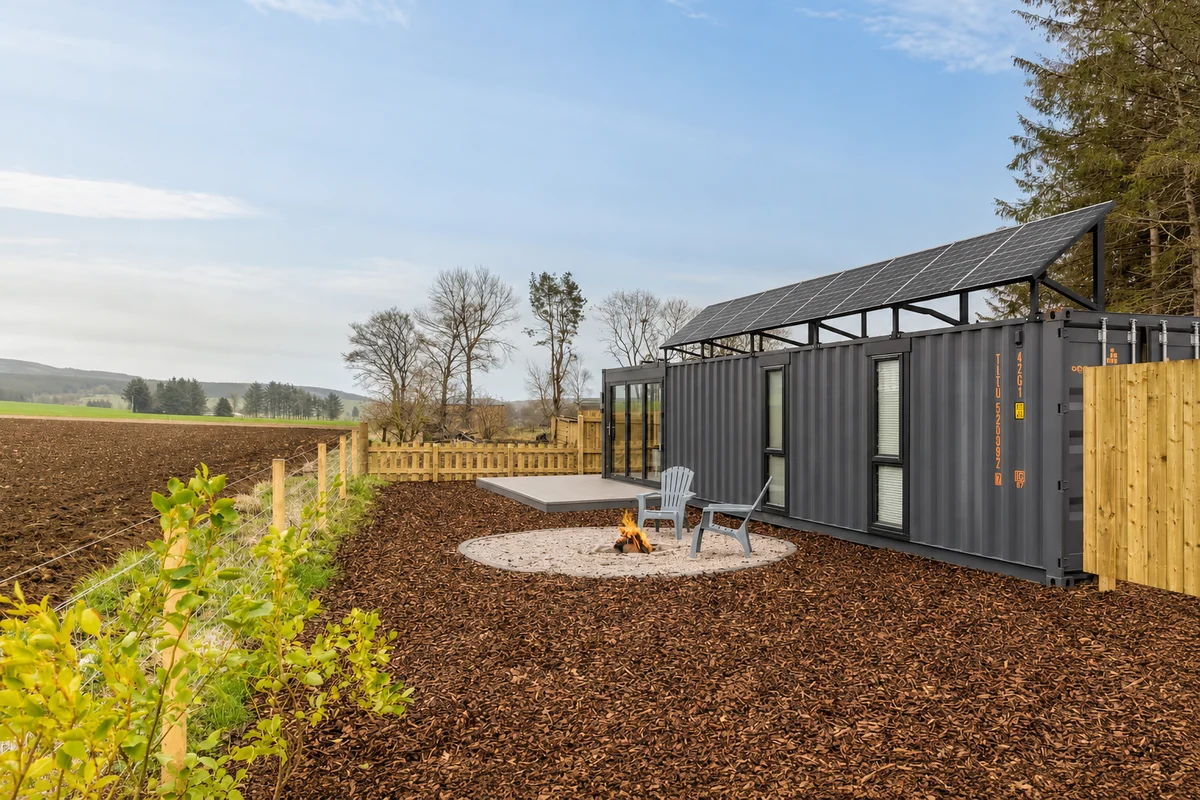
Can You Install Solar Panels on a Shipping Container?
Yes. Shipping containers are well suited for solar installations thanks to their strong steel structure and flat roof. With a proper mounting system, rooftop solar panels can safely generate electricity for everyday household loads while leaving enough space for maintenance and ventilation.
For container homes, solar power is especially attractive because it reduces dependence on the grid and makes remote locations much more practical.
From my experience working with container-based energy solutions, the best results come when the solar system is considered during the design stage rather than added later. Planning the panel layout, inverter, battery storage, and cable routing together usually creates a cleaner installation and improves long-term reliability.
How Many Solar Panels Fit on a 20ft Shipping Container?
A standard 20ft shipping container measures approximately:
- Length: 6.06 m (19.9 ft)
- Width: 2.44 m (8 ft)
- Roof area: About 14.8 m² (160 sq ft)
Modern high-efficiency solar panels commonly range from 430W to 600W and measure roughly 2.2 × 1.1 meters (7.2 × 3.6 feet).
After allowing for mounting hardware and maintenance clearance, a 20ft container can usually accommodate:
- 5–6 solar panels
- Total system size: 2.5–3.6 kW
This capacity is generally suitable for powering:
- LED lighting
- Refrigerator
- Television
- Internet equipment
- Laptop computers
- Small kitchen appliances
- Water pumps
- Battery charging
With a properly sized lithium battery, many users can comfortably meet their daily electricity needs.
How Many Solar Panels Fit on a 40ft Shipping Container?
A standard 40ft shipping container offers nearly twice the roof area.
Typical dimensions include:
- Length: 12.19 m (40 ft)
- Width: 2.44 m (8 ft)
- Roof area: About 29.7 m² (320 sq ft)
Under normal installation conditions, the roof can accommodate:
- 10–12 solar panels
- Total system size: 5–7.2 kW
A system of this size is capable of supporting much larger electrical loads, including:
- Air conditioning
- Washing machine
- Kitchen appliances
- Office equipment
- Water pumps
- Home entertainment
- Battery storage systems
For many off-grid container homes, a rooftop system around 6 kW provides an excellent balance between performance and installation cost.
Estimated Rooftop Solar Capacity
| Shipping Container | Roof Area | Solar Panels | Installed Capacity |
| 20ft | 14.8 m² (160 sq ft) | 5–6 | 2.5–3.6 kW |
| 40ft | 29.7 m² (320 sq ft) | 10–12 | 5–7.2 kW |
These figures are based on standard commercial solar panels. The exact number may vary depending on the panel dimensions, mounting angle, and local building requirements.
Is the Roof Enough for an Off-Grid Container Home?
That depends on your energy consumption.
For weekend cabins or compact container homes, the rooftop alone is often sufficient.
However, if your container home includes:
- Multiple air conditioners
- Electric cooking
- Electric water heating
- EV charging
- Workshop equipment
the available roof space can quickly become the limiting factor rather than the solar panel efficiency.
Fortunately, expanding the system is straightforward.
Add Ground-Mounted Solar Panels for More Power
One of the simplest ways to increase energy production is to install additional solar panels on the ground next to the container.
Ground-mounted systems offer several advantages:
- Virtually unlimited expansion
- Better airflow around the panels
- Easier cleaning and maintenance
- Flexible orientation toward the sun
- Higher total energy production
This approach is especially popular for permanent container homes where land is readily available.
Instead of limiting yourself to 10 or 12 rooftop panels, you can easily double or triple the total generating capacity with nearby ground-mounted arrays.
Other Ways to Expand Solar Capacity
Besides rooftop and ground-mounted systems, there are several practical options.
Solar Carports
Installing solar panels above a parking area creates extra generating capacity while providing shade for vehicles.
Fold-Out Solar Arrays
Some mobile container power systems use foldable solar arrays that deploy after transportation.
This design dramatically increases the available solar surface without increasing transportation dimensions. HighJoule applies this concept in mobile solar container solutions for construction sites, disaster relief, mining projects, and temporary power stations, where rapid deployment and high power output are equally important.
How Much Electricity Can These Systems Produce?
Actual electricity production depends on local solar irradiance, weather, and panel orientation.
As a general estimate:
- A 3 kW solar system can generate approximately 12–18 kWh per day in sunny regions.
- A 6 kW system may produce 24–36 kWh per day under similar conditions.
With battery storage, this is enough to operate most container homes throughout the day and night.
If additional power is required, ground-mounted panels can significantly increase daily energy production without modifying the container itself.
Choosing the Right Solar System
The ideal system depends on how the shipping container will be used.
A rooftop-only installation is often the most economical solution for small homes, offices, and recreational cabins. For full-time off-grid living or commercial applications, combining rooftop panels with ground-mounted solar arrays provides much greater flexibility and room for future expansion.
In my view, it’s always worth planning for future energy needs. Electricity demand tends to increase over time, whether that’s adding air conditioning, new appliances, or charging an electric vehicle. Designing the system with expansion in mind makes future upgrades much easier.
Final Thoughts
A standard 20ft shipping container can typically support 5–6 solar panels, while a 40ft shipping container can accommodate 10–12 panels, providing up to 7.2 kW of rooftop solar capacity. For many container homes, that’s enough to cover everyday electricity needs with the help of battery storage.
If you need more power, don’t let the roof become your limit. Ground-mounted solar panels, solar carports, and fold-out solar structures can dramatically increase total energy production, allowing a shipping container home to operate efficiently even in fully off-grid environments.


